Garden Room Permitted Development in Nottingham 2026
Home & Garden, Garden Rooms, Permitted Development, Building Regulations
Permitted Development Rules for Garden Rooms in Nottingham: A Friendly 2026 Guide
Thinking about adding a stylish garden room to your Nottingham home, but worried about planning permission, permitted development rules, or building regulations? You’re not alone. This friendly, up‑to‑date guide walks you through what you can and can’t do in 2026, so you can plan your dream space with confidence.
What Exactly Is a Garden Room?
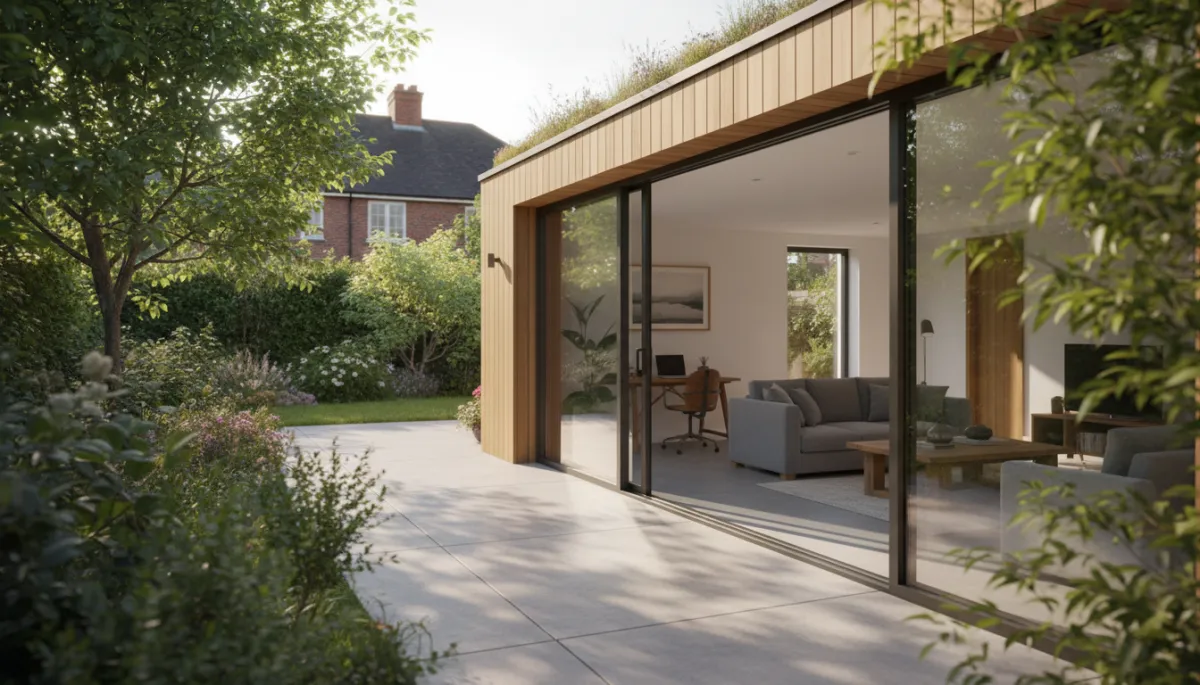
Before diving into rules and regulations, it helps to be clear about what we mean by garden rooms. In planning terms, a garden room is usually a detached building in your garden that’s used for everyday activities – think home office, gym, studio, snug, hobby room, or a quiet place to escape the chaos of the main house. It’s separate from your main home, but still very much part of it, and it should be used in an ancillary way, supporting your main house, not replacing it as a separate dwelling.
In Nottingham, you’ll see garden rooms tucked behind Victorian terraces in West Bridgford, semi‑detached homes in Sherwood, and newer properties in places like Beeston and Arnold. The good news is that, in many cases, these buildings can be created under permitted development rights, meaning you don’t need a full planning application as long as you follow the rules carefully.
Permitted Development: The Basics for Garden Rooms in Nottingham
Across England, including Nottingham, the main rules for garden rooms sit under Part 1, Class E of the General Permitted Development Order (GPDO). These national rules mean certain works can go ahead without needing formal planning permission, provided you stay within specific limits and conditions (see the government’s technical guidance on householders’ permitted development rights at gov.uk).
Key Permitted Development Rules for Garden Rooms
Location: Your garden room must be in the rear garden, not in front of the house’s main (principal) elevation. So, nothing in the front garden if you want to rely on permitted development.
Garden coverage: All outbuildings combined – sheds, garages, and your new garden room must not cover more than 50% of the land around the “original house”. The “original house” means how it stood in 1948, or when it was first built if later.
Height limits: For a dual‑pitched or hipped roof, the maximum height is 4 m. For other roof types (flat or mono‑pitch), you’re limited to 3 m. In all cases, the eaves height must not exceed 2.5 m.
Use: The space must be ancillary to your main home. That means you can use it as a home office, playroom, yoga studio, or entertainment space but not as a self‑contained flat or separate dwelling with its own kitchen and permanent sleeping accommodation.
Protected areas: In conservation areas, National Parks, Areas of Outstanding Natural Beauty, World Heritage Sites, or the curtilage of listed buildings, extra restrictions apply. Side garden buildings are particularly affected, and you may lose permitted development rights altogether in some cases.
💡 Friendly tip: If your dream garden room is a simple, single‑storey building in the back garden, used as a hobby room or office and well within the size and height limits, there’s a good chance it will fall under permitted development, but always double‑check the details.
Nottingham‑Specific Rules: Conservation Areas and Article 4 Directions
Nottingham has its own local twists on planning, particularly in areas with historic character. The City Council has introduced Article 4 Directions in certain neighbourhoods such as parts of Sneinton, Strelley Village, and Devonshire Promenade which remove some permitted development rights, including for small outbuildings (nottinghamcity.gov.uk).
If your home is within an Article 4 area, or in a Conservation Area, or your property is listed, you may need full planning permission even for a modest garden room that would otherwise be permitted development. Around Nottingham, nearby authorities such as Gedling are also consulting on new Article 4 Directions in places like Netherfield, which may affect some households on the city fringes.
📌 Key takeaway: Always check whether your address sits in a Conservation Area, is listed, or is covered by an Article 4 Direction before assuming your garden room is permitted development.
How Building Regulations Affect Garden Rooms in Nottingham
Planning permission and Building Regulations are two separate systems. Even if your garden room is allowed under permitted development, it may still need to meet certain technical standards set out in the Building Regulations, especially as garden rooms become more like fully‑fledged living spaces rather than simple sheds.
When Building Regulations Usually Don’t Apply
If your garden room is under 15 m² internal floor area, is detached, has no sleeping accommodation, and is at least 1 m from any boundary, it will generally be exempt from Building Regulations approval.
Many compact garden offices in Nottingham fit neatly into this category. However, even when formal approval isn’t required, reputable builders will still design to good standards for structure, insulation, and ventilation, so the space is comfortable year‑round rather than feeling like a glorified shed.
When Building Regulations Start to Matter
Under 15 m² but within 1 m of a boundary: Fire safety kicks in. External walls often need to be 30‑minute fire‑resisting if they’re close to the boundary.
15–30 m²: Building Regulations apply in a more relaxed way, focusing on structure and fire safety, but still needing proper design and possibly Building Control sign‑off, especially if you’re planning a high‑spec garden studio or gym.
Over 30 m² or any size used for sleeping: Full Building Regulations apply – including structure, insulation, ventilation, drainage (if there’s plumbing), fire safety, and sometimes accessibility (Part M). At this point, you’re edging into annex territory rather than a simple garden room.
No matter what size you choose, any electrical work must comply with Part P of the Building Regulations. That means using a registered electrician who can certify the work or submit it to Building Control. It’s worth doing properly: safe wiring is essential, and a completion certificate is very helpful when you come to sell your home.
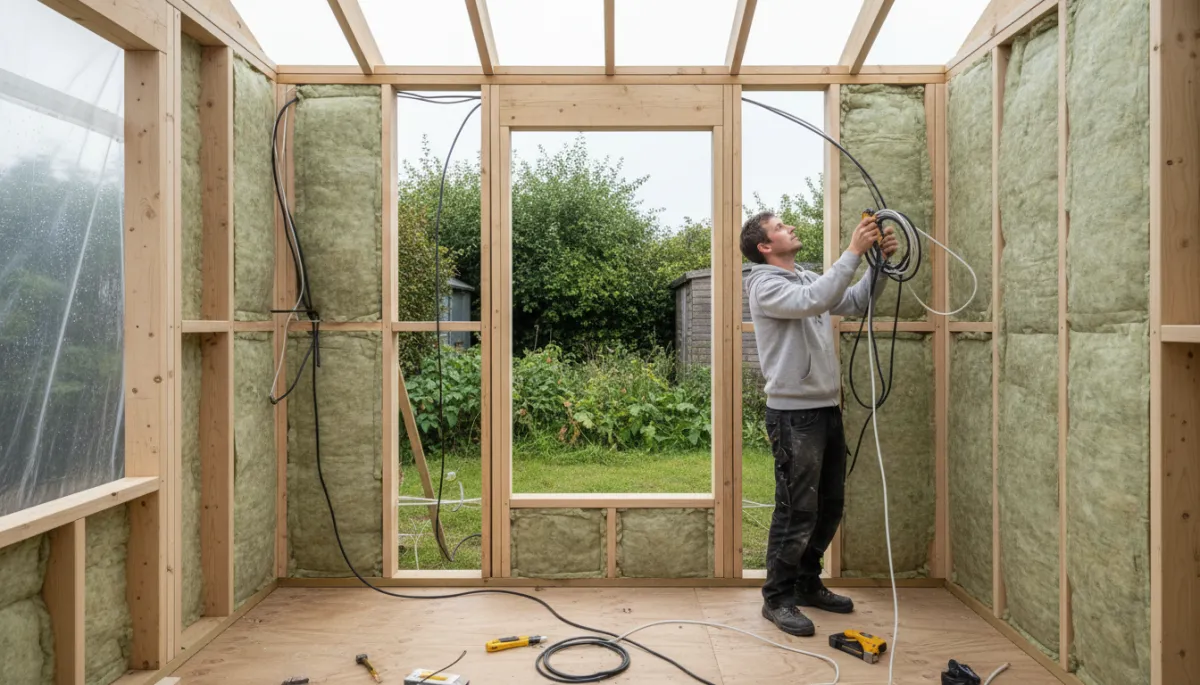
Thoughtful design and compliant electrics help your garden room feel like a true extension of home.
Real‑World Scenarios: Do You Need Permission for Your Garden Room?
Scenario 1: Compact Home Office in a Typical Nottingham Semi
You live in a semi‑detached house in Mapperley with a decent‑sized back garden. You’d like a 3 m × 3 m garden office with a flat roof, positioned 2.5 m from the rear boundary. It will be used as an office and reading room, with power and heating but no plumbing or sleeping. You’re nowhere near a Conservation Area and the combined footprint of your shed and the new garden room is well under 50% of your garden.
In this case, the garden room is very likely to be allowed under permitted development, and will probably be exempt from full Building Regulations (though Part P still applies to electrical work). A good local installer can design the building so that it remains within the 2.5 m eaves height and overall height limits, keeping things simple and stress‑free.
Scenario 2: Larger Garden Studio Near a Boundary
Imagine you’re in Wollaton and you’d like a 5 m × 4 m multi‑purpose studio for work, music, and exercise. You plan to tuck it just 0.8 m from the rear boundary to maximise lawn space. It’s under 30 m² but bigger than 15 m², with no sleeping accommodation.
Planning‑wise, it might still fit within permitted development if you respect the height limits and garden coverage rules. However, Building Regulations will start to come into play – particularly for structure and fire safety – and the close boundary means extra attention to fire‑resistant construction. This is where working with an experienced garden room builder in Nottingham makes a big difference, as they’ll design the structure with these requirements in mind from day one.
Scenario 3: Conservation Area in Central Nottingham
You own a Victorian terrace near The Park or in another Conservation Area. You’d like a modest 3 m × 2.5 m garden room as a quiet workspace. Because of the area’s protected status and any Article 4 Directions in place, your usual permitted development rights may be restricted or removed entirely. In this situation, you’ll likely need to apply for planning permission, even though the building is small.
💬 Friendly advice: In sensitive areas, a well‑designed, sympathetic garden room using natural timber, neutral colours, and a modest scale stands a much better chance with the planners than something bulky or out of character.
Lawful Development Certificates: Peace of Mind for Nottingham Homeowners
Even when you’re confident your garden room is covered by permitted development, you might still feel a bit uneasy about just going ahead. That’s where a Lawful Development Certificate (LDC) comes in. This is a formal document from Nottingham City Council confirming that your proposed garden room is lawful and does not require planning permission (nottinghamcity.gov.uk).
An LDC isn’t compulsory, but it’s very helpful if you ever decide to sell your property. Buyers – and their solicitors – love clear evidence that everything has been done properly. Many homeowners in Nottingham choose to apply for an LDC before they build, especially for higher‑value garden rooms that feel like an extra room of the house rather than a simple shed.
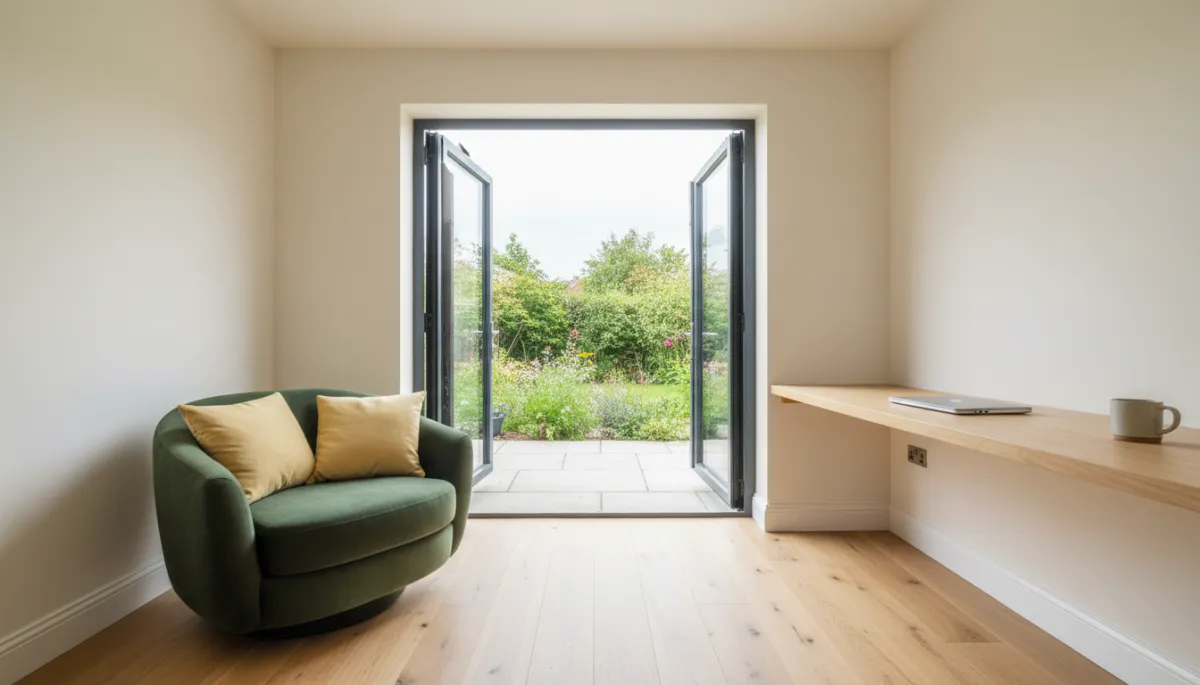
A well‑designed garden room can feel like a natural extension of your living space.
Working with a Garden Room Builder in Nottingham
While it’s possible to navigate permitted development and building regulations on your own, most homeowners prefer to work with a specialist who understands Nottingham’s planning landscape and can guide them through each step. A knowledgeable garden room builder will:
Help you design a garden room that fits comfortably within permitted development limits where possible.
Advise when planning permission or an LDC is sensible, especially in Conservation Areas or Article 4 zones.
Build to appropriate standards so that fire safety, structure, insulation, and electrics are all handled correctly.
Create a design that looks good in all seasons and sits naturally within your garden, using neutral, timeless materials and colours.
If you’re comparing options, look for a garden room builder in Nottingham who can show you previous projects locally, understands the nuances of Nottingham City Council’s approach, and is happy to talk through how permitted development and Building Regulations apply to your specific plot.

A carefully positioned garden studio can add value, comfort, and everyday enjoyment to your home.
Step‑by‑Step: Planning Your Garden Room Project in Nottingham
Check your property’s status. Use Nottingham City Council’s online tools or contact the planning team to see if you’re in a Conservation Area, Article 4 Direction area, or have a listed building (nottinghamcity.gov.uk).
Measure your garden and sketch ideas. Consider where the sun falls, how you’ll access the space, and what views you’d like from your desk or sofa. Keep an eye on the 50% garden coverage rule and the height limits.
Decide on size and use. Under 15 m² is usually simpler from a Building Regulations perspective, but if you need more space, that’s fine – just plan for the extra technical requirements and potential approvals.
Talk to a specialist builder. Share your ideas, photos of your garden, and any information about your property’s planning status. A good builder will quickly tell you whether your concept sits comfortably within permitted development or whether planning permission or an LDC is advisable.
Agree the design and specification. This includes structure, insulation, cladding, glazing, electrics, and any plumbing. Make sure the design aligns with Building Regulations where they apply, especially for fire safety and electrics.
Get permissions in place (if needed). If you’re in a sensitive area or pushing the boundaries of permitted development, submit a planning application or apply for a Lawful Development Certificate before work starts.
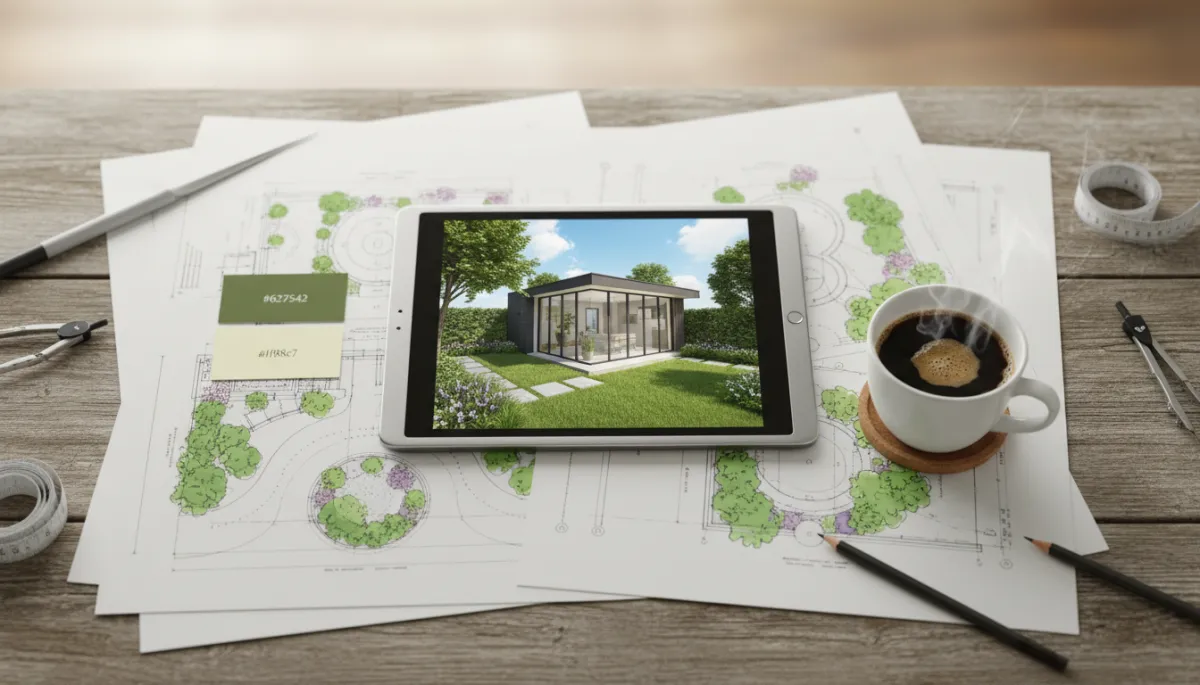
Careful planning at the start makes the build smoother and avoids regulatory surprises later.
Bringing It All Together: Enjoying Your Garden Room with Confidence
Garden rooms in Nottingham have come a long way from draughty sheds. With thoughtful design, they can be warm, bright, and genuinely life‑enhancing – a calm home office, a creative studio, or a cosy retreat at the end of the garden. By understanding permitted development rules, respecting local planning nuances, and paying attention to Building Regulations, you can enjoy that extra space without nasty surprises.
The key is to treat your project as a small but serious building, not just a big shed. Get the structure, insulation, and electrics right; check whether your property is affected by Article 4 Directions or Conservation Area status; and don’t be afraid to ask for professional help with planning and technical details when you need it.
Ready to Explore a Garden Room for Your Nottingham Home?
If you’re feeling inspired to create your own garden retreat and would like friendly, expert guidance on permitted development, Building Regulations, and design options, it’s well worth speaking to a specialist garden room builder in Nottingham such as NG2 Garden Studio Co. Ltd who knows the local rules inside out and can handle the details on your behalf.
From first ideas through to a finished, beautifully crafted space in your garden, the right partner can make the whole process simple and enjoyable leaving you free to focus on how you’ll actually use your new room, rather than worrying about paperwork and technicalities.
Ready to turn your garden room ideas into reality in Nottingham? Reach out to a trusted local specialist today to chat through your plans, check how permitted development applies to your home, and start designing a space you’ll love for years to come.
[Read Next]
Best Cladding Options for Garden Rooms in Nottingham
[Find Out]
How Much Does a Garden Room Cost in 2026?
[Learn More]