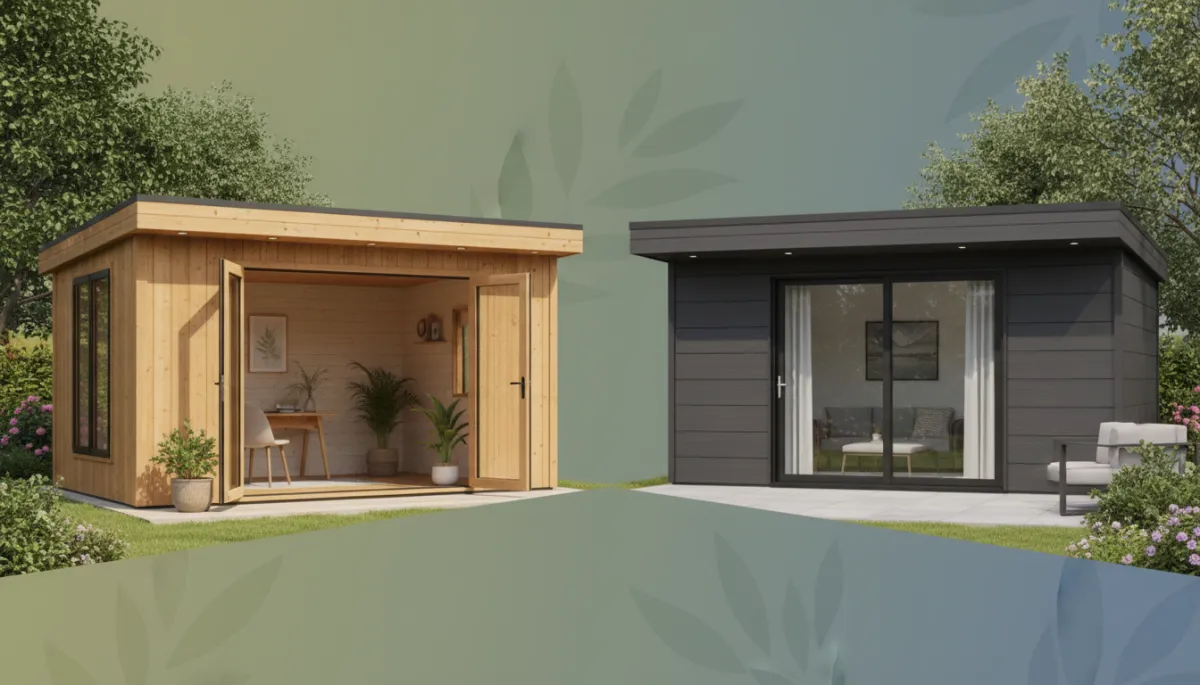
Timber vs Composite: Best Garden Room Choice
Home & Garden, Timber Garden Rooms, Composite Garden Rooms, Sustainable Building Materials
Timber vs Composite Garden Rooms: Which Is Best for Your Home?
Thinking about adding extra space at home without the chaos of a full extension? A garden room can be a calm, light-filled retreat for work, hobbies or simply a quiet cuppa away from the main house. One of the first decisions you will face is whether to choose a Timber Garden Room or a Composite Garden Room – and that choice can feel a little overwhelming at first glance.
Why Garden Rooms Are So Popular Right Now
Over the last few years, garden rooms have quietly become one of the most popular home upgrades in the UK. They offer a flexible, comfortable space that can evolve with your lifestyle. From home office to teenage den, craft studio to guest room. Unlike a loft conversion or extension, a garden room is usually quicker to build, less disruptive, and often doesn’t require full planning permission (though it is always wise to check local rules).
But once you start researching, you will notice two main options cropping up everywhere: Timber Garden Rooms and Composite Garden Rooms. Both can look stunning, both can be cosy year-round – and both can be made using Sustainable Building Materials. The difference lies in their feel, maintenance needs, and how they age over time.
Timber Garden Rooms: Warm, Natural and Timeless
Timber has been used in British homes for centuries, and there is a good reason for that. A Timber Garden Room instantly brings warmth and character to your outdoor space. The natural grain, soft tones and gentle weathering sit beautifully alongside planting, lawns and mature trees. If you love the idea of a cabin-like retreat or a Scandi-style studio, timber is hard to beat.
Natural look & feel: Timber blends effortlessly into most gardens, from cottage plots to sleek, contemporary spaces.
Renewable resource: When sourced responsibly, timber is one of the most widely available Sustainable Building Materials.
Customisable finish: You can stain, oil or paint timber to suit your style – and change it in future as trends (or your taste) evolve.
In terms of sustainability, timber scores well when it comes from FSC or PEFC-certified forests. Trees absorb carbon as they grow, and using timber in construction effectively locks that carbon away for the lifespan of the building. Pair that with good insulation, efficient glazing and careful detailing, and a timber structure can be a very planet-friendly choice.
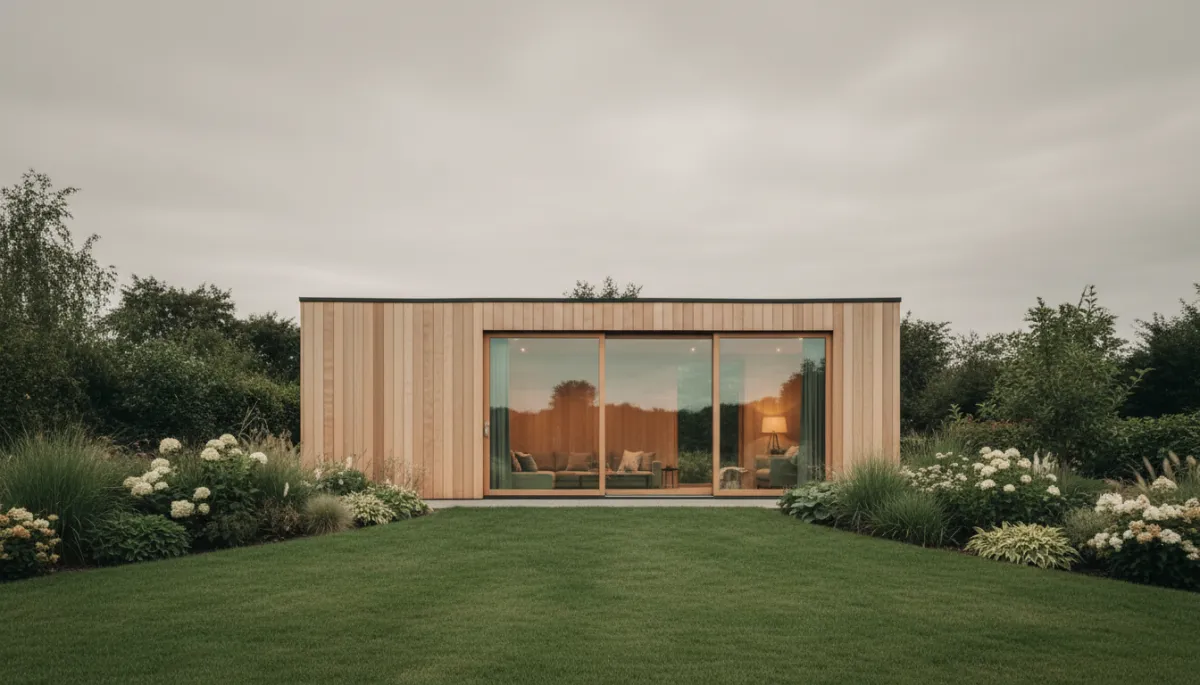
A timber garden room creates a warm, natural focal point at the end of the garden.
Things to consider with timber
The main trade-off with a Timber Garden Room is maintenance. To keep the cladding looking its best and protect it from the British weather, you will usually need to re-coat it every few years with an oil, stain or paint. Many people actually enjoy this occasional refresh, as it is a chance to update the colour or simply spend time caring for their space – but it is important to be realistic about the commitment.
Over time, even well-maintained timber will change slightly in tone and character. Some homeowners love this gentle silvering and softening; others prefer a material that stays looking almost identical from day one. If you fall into the second camp, it is worth looking closely at composite options.
Composite Garden Rooms: Sleek, Low-Maintenance and Consistent
Composite Garden Rooms use boards made from a blend of materials – typically recycled plastics combined with wood fibres or other binders. The result is a cladding that looks smart and contemporary, often with a subtle wood-effect texture, but requires very little ongoing care. For busy households or anyone who does not fancy regular re-staining, this can be a big plus.
Minimal upkeep: Composite cladding generally needs just an occasional wash down with soapy water to keep it looking fresh.
Colour stability: The boards are designed to resist fading, so your garden room should keep its original tone for many years.
Clean, modern look: Ideal if you are aiming for a crisp, architectural feel that ties in with bi-fold doors, aluminium windows or a newly landscaped garden.
From a sustainability point of view, composite products can be a smart way to reuse waste materials, especially plastics that might otherwise end up in landfill. When you are comparing options, it is worth asking how much recycled content is used, and whether the boards themselves can be recycled at the end of their life. This will give you a clearer picture of how they fit into the wider world of Sustainable Building Materials.
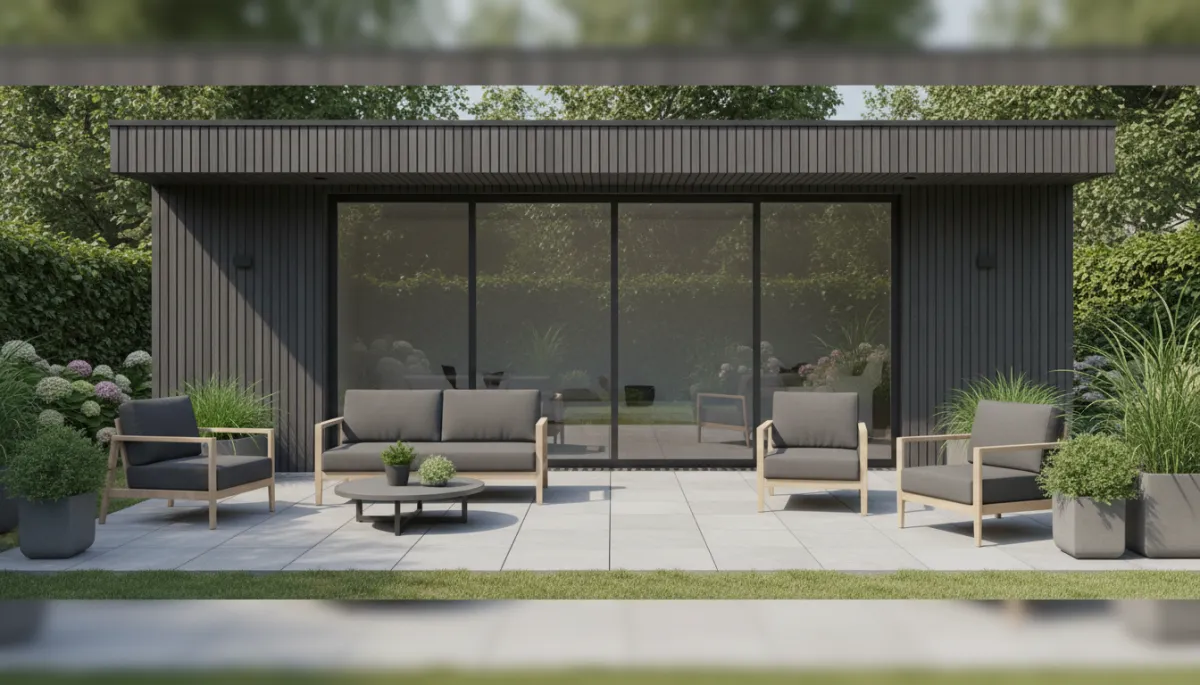
Composite cladding offers a sleek, consistent finish with very low maintenance demands.
Things to consider with composite
While composite boards are durable and practical, they do not have quite the same tactile feel as real timber. If you love the knots, grain and gentle imperfections of natural wood, composite may feel a little more engineered. It is also important to choose a high-quality system from a trusted supplier so that you get the full benefits of weather resistance and colour stability that composite is known for.
Cost-wise, Timber Garden Rooms and Composite Garden Rooms can be surprisingly close, especially once you factor in long-term maintenance. Timber may be slightly cheaper up front, while composite can save you money and effort over the years because you are not buying stains, paints and brushes – or paying someone else to do the work for you.
Sustainability: Looking Beyond the Surface
Whichever route you are leaning towards, it is reassuring to know that both timber and composite can be part of a thoughtful, eco-conscious build. The key is to ask the right questions and look at the whole structure, not just the outer cladding. Walls, roofs, insulation and glazing all play a part in how sustainable and comfortable your garden room will be over its lifetime.
Responsibly sourced timber: Look for certification and ask where the wood comes from.
Recycled content in composites: Higher recycled content usually means a better use of existing resources.
Efficient insulation: Good insulation and airtightness reduce the energy needed to heat or cool your garden room.
Durability: A well-built structure that lasts for decades is, in itself, a sustainable choice.
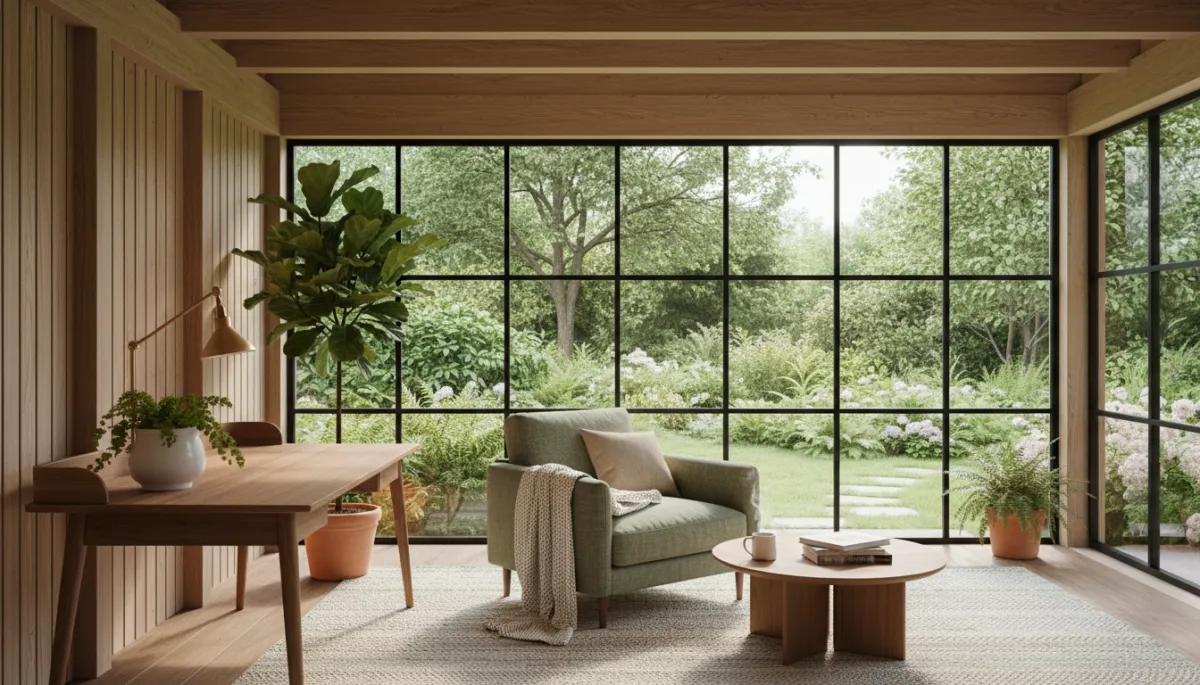
Thoughtful design and insulation create a comfortable, energy-efficient space all year round.
Working with a Local Garden Room Builder in Nottingham
Choosing the right materials is only half the story – the other half is finding a team you trust to bring your ideas to life. A local specialist will understand Nottingham’s mix of period homes, new-build estates and everything in between, and can help you position your garden room to make the most of light, privacy and views.
A company such as NG2 Garden Studio Co., a local garden room builder in Nottingham, can talk you through the pros and cons of Timber Garden Rooms and Composite Garden Rooms in the context of your own garden. They will look at access, ground conditions, nearby trees and existing landscaping, then suggest designs that feel as though they have always belonged there.
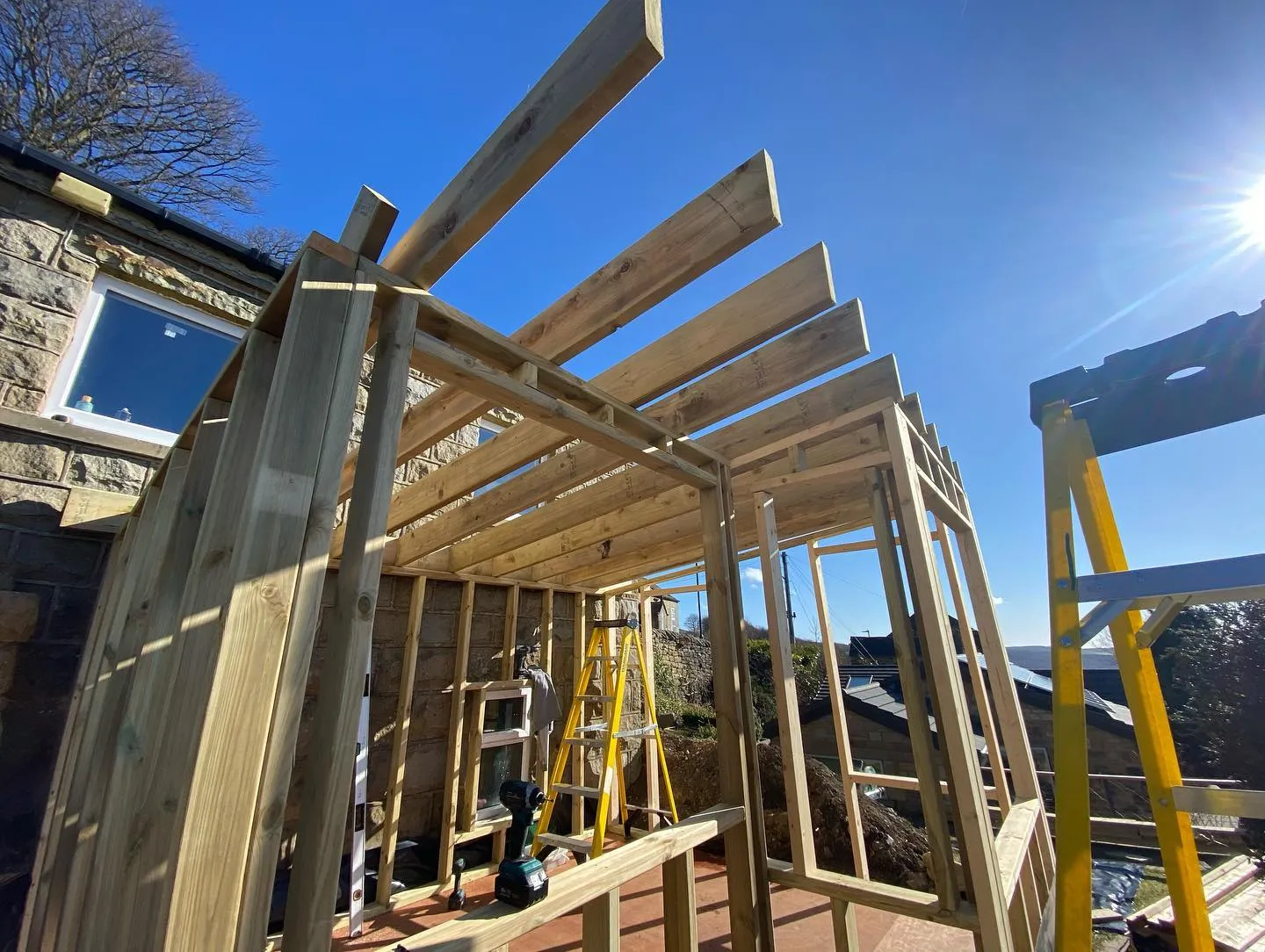
Local specialists can tailor your garden room to your plot, lifestyle and budget.
Working with a nearby firm also makes it easier to pop into a showroom, view sample materials and ask all those little questions that crop up along the way. Whether you are curious about Sustainable Building Materials, wondering how to heat the space efficiently, or unsure how big to go, an experienced Nottingham-based team like NG2 Garden Studio Co. can offer friendly, down-to-earth advice rather than a one-size-fits-all package.
Timber vs Composite: Which Garden Room Is Right for You?
When you strip away the jargon, the choice between timber and composite comes down to a few simple questions:
How much maintenance are you happy to do? If you are comfortable re-coating cladding every few years, timber is a lovely option. If you would rather not think about it, composite may suit you better.
What look are you drawn to? Do you picture a warm, cabin-like retreat, or a crisp, minimal studio with sharp lines?
How important is visible natural material? If the feel of real wood matters to you, timber will win. If you are more focused on long-term neatness, composite is a strong contender.
What are your sustainability priorities? Both can be eco-conscious choices when specified carefully, so talk to your builder about sourcing, recycled content and insulation.
Many homeowners in and around Nottingham find that once they have answered these questions, the “right” option becomes surprisingly clear. And if you are still on the fence, asking a local expert such as NG2 Garden Studio Co. to walk you through real-life examples – perhaps even visiting completed projects – can make the decision feel much easier and more enjoyable.
Ready to Plan Your Own Garden Retreat?
Whether you are dreaming of a timber-clad hideaway or a sleek composite studio, a well-designed garden room can genuinely change the way you use your home. It can give you a peaceful workspace, a place for hobbies to flourish, or simply a cosy spot to relax and enjoy your garden in all seasons – all while making thoughtful use of Sustainable Building Materials.
If you are in or around Nottingham and would like some friendly, expert guidance, NG2 Garden Studio Co. can help you explore both Timber Garden Rooms and Composite Garden Rooms in detail, so you can choose the option that feels right for your home, your lifestyle and your values.
Ready to take the next step? Start sketching out how you would use your ideal garden room, then reach out to a trusted local builder to discuss designs, budgets and materials. With the right support, your new space could be just a season away – and you will be enjoying that first cup of tea in your own garden studio before you know it.
[Read Next]
Can You Sleep in a Garden Room?
[Find Out]
[Learn More]